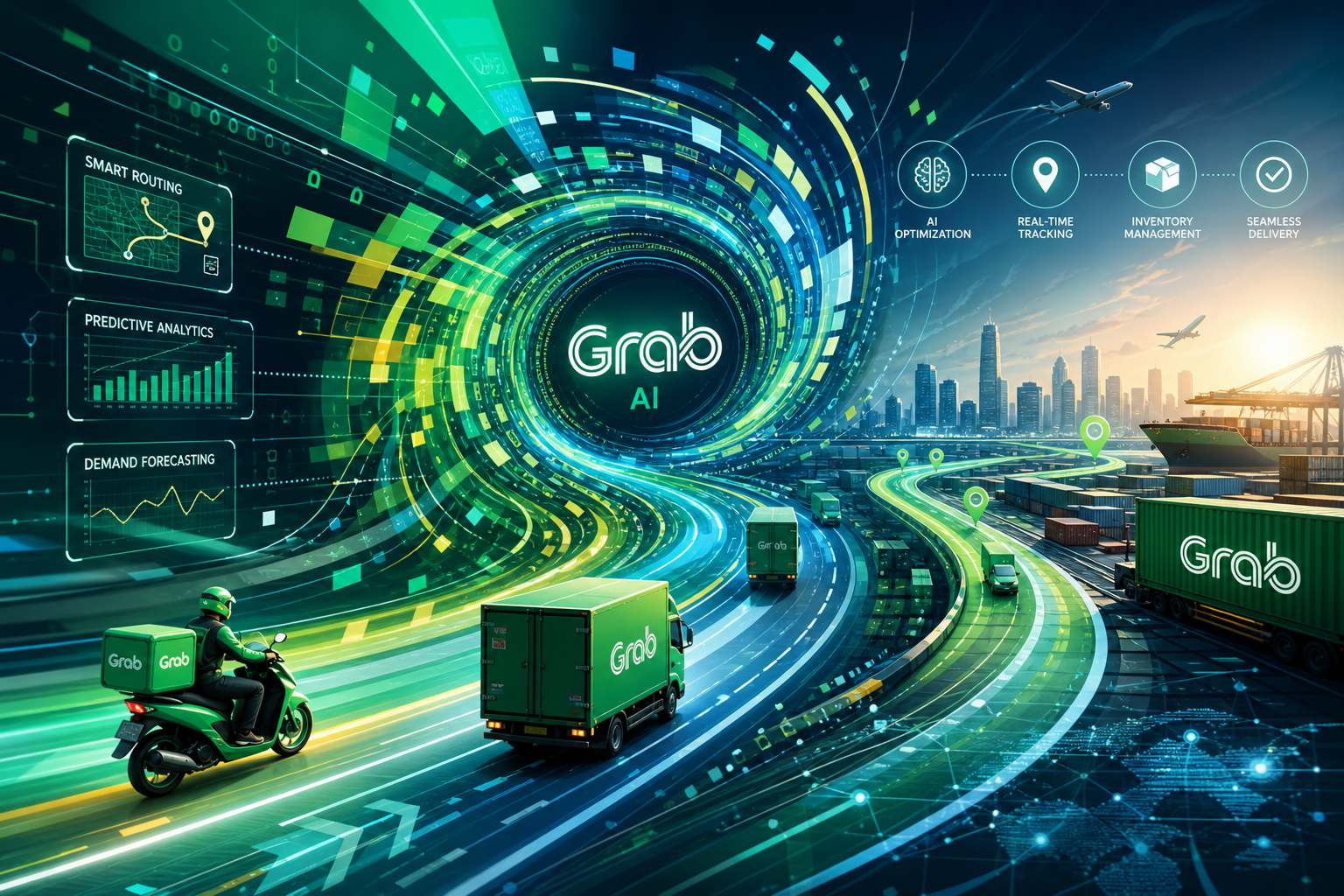
In the rapidly evolving landscape of digital transformation, companies are scrambling to harness the power of artificial intelligence (AI) to gain a competitive edge. Recently, Grab, a prominent Southeast Asian technology company, showcased the transformative potential of AI in their operations. With the release of their second-quarter results, the company not only highlighted significant improvements in their logistics but also raised their full-year forecasts, underscoring their optimism about future growth.
The Role of AI in Revolutionizing Logistics
In today's fast-paced world, efficiency is king. The ability to deliver products swiftly can make or break a company's reputation. Grab has reported a remarkable improvement of over 30% in shipping speed, as stated by their CFO, reflecting the power of AI in refining logistical operations. By integrating AI solutions, Grab has been able to streamline processes, predict demand more accurately, and optimize delivery routes. This has not only reduced delivery times but also minimized costs, allowing the company to allocate resources more strategically.
The integration of AI into logistics isn't just about speed; it's about precision and adaptability. AI systems can process vast amounts of data from various sources, enabling them to anticipate potential disruptions and adjust plans accordingly. In an industry where timing is crucial, these capabilities provide a significant advantage.
Beyond Speed: The Broader Implications for Business
While the immediate impact of AI in logistics is the enhancement of delivery times, the broader implications for businesses are profound. AI's integration into operational frameworks can lead to improved customer satisfaction, as faster deliveries often translate to happier customers. Moreover, with AI handling the more mechanical aspects of logistics, human resources can be redirected towards more strategic and creative tasks, fostering innovation.
In addition to operational improvements, the data generated through AI-driven logistics can offer invaluable insights into consumer behavior and preferences. This information can guide marketing strategies, product development, and customer service enhancements. In essence, AI not only accelerates logistics but also empowers businesses with actionable intelligence.
What This Means for Grab's Future
Grab's decision to raise its full-year forecasts following these operational improvements signals confidence in their strategy and technology. As AI continues to evolve, the potential for further optimization and innovation grows. The company's trajectory suggests a future where technology and human ingenuity work in tandem to create more efficient, responsive, and customer-centric business models.
For Grab, the benefits of AI extend beyond logistics. The technology is a catalyst for growth, enabling the company to expand its service offerings, enter new markets, and ultimately, increase its market share. By positioning itself as a leader in AI-driven logistics, Grab sets a benchmark for others in the industry.
A Provocative Thought on the Future of AI in Business
As we witness the transformative power of AI in companies like Grab, one can't help but wonder: Are we on the brink of a new era where AI not only supports but leads business strategy? The potential is vast, but it requires businesses to be adaptable, forward-thinking, and open to change. As AI becomes more sophisticated, its role in business will undoubtedly grow, challenging us to rethink traditional models and embrace new possibilities.
In the end, the story of Grab is not just about faster deliveries—it's about a vision of the future where technology and human innovation propel us towards unprecedented efficiency and success.