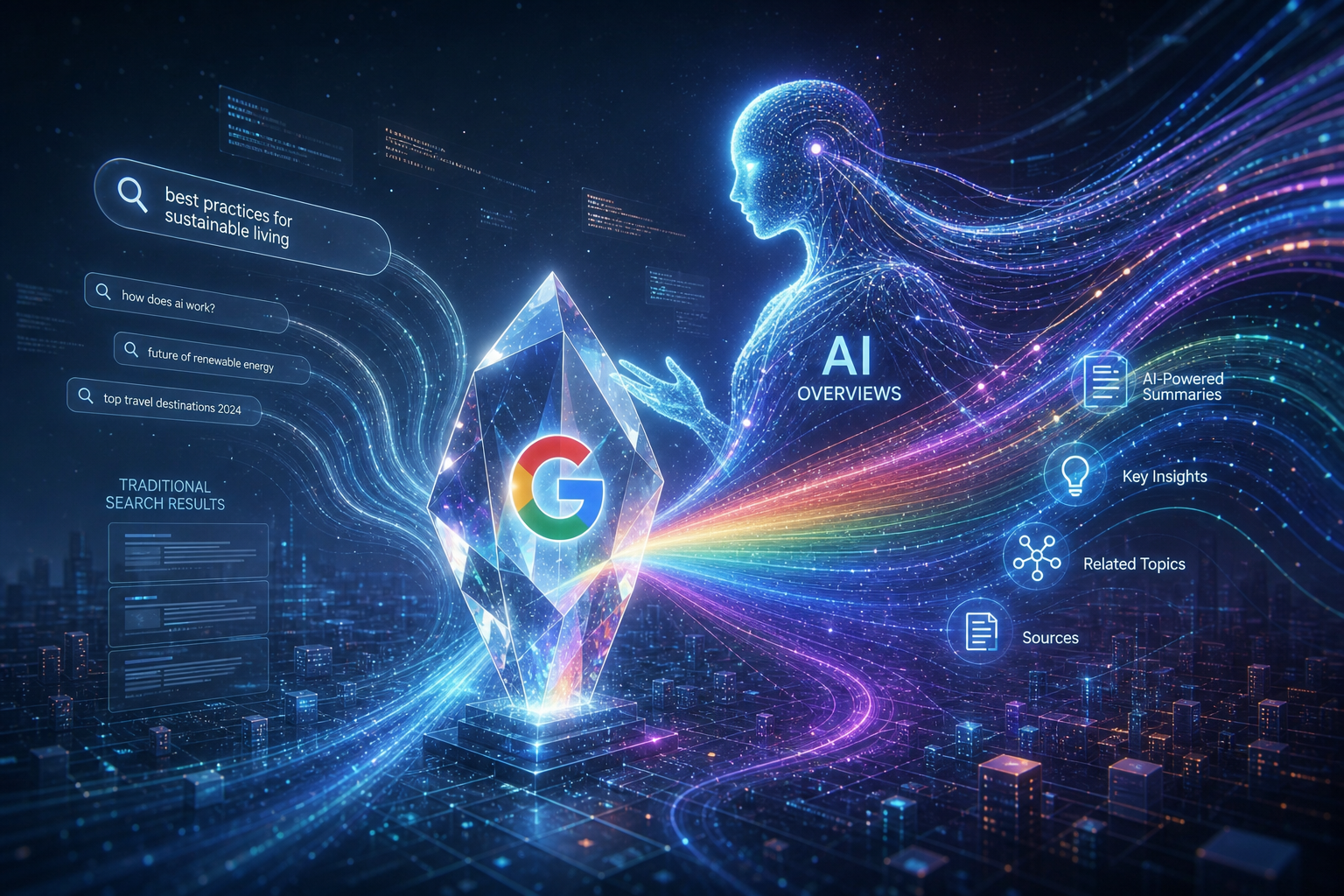
The landscape of digital search has undergone a seismic shift. As Google, the titan of the internet, integrates artificial intelligence into its core search engine, users are now greeted with a feature named AI Overviews. This feature provides a summarized response from an AI chatbot before the familiar list of search links. It's a change that speaks volumes about the evolving nature of information retrieval and consumption. But is this transformation truly enhancing our experience, or does it complicate the simplicity we've come to rely on?
The New Face of Google Search
Imagine opening Google's homepage, only to find that the search bar now offers more than just a gateway to endless links. Instead, you first encounter a concise summary generated by AI. This is not just a superficial tweak. It's a fundamental change in how Google presents information. Liz Reid, Google’s vice-president of search, emphasized the significance of this shift in August, calling it "the most significant upgrade of the Google Search experience ever." And Google isn't stopping here; more AI-driven enhancements are on the horizon.
The introduction of AI Overviews reflects a broader trend in digital behavior. As users, we're becoming accustomed to AI chatbots that provide quick, coherent answers to our queries. This change caters to our growing impatience for fast information and our desire for convenience.
Shifting Browsing Habits and User Experience
The internet is vast, and the way we navigate it is constantly evolving. AI integration into Google Search isn't just about providing answers; it's about reshaping our browsing habits. Users are now encouraged to engage with information differently. Instead of sifting through multiple links, they can get a distilled version of information upfront.
But here's the rub: this convenience comes with its own set of challenges. For one, it raises questions about information accuracy. How does the AI determine which responses to prioritize? Are we sacrificing depth for speed? These are not trivial concerns, especially when we consider the potential for AI to influence our understanding and decision-making.
What This Means for Businesses and Information Seekers
For businesses, this shift could mean adapting to new SEO strategies. Traditional link-based search optimization might need to evolve to ensure visibility in an AI-dominated search environment. Companies will need to consider how their content can be effectively summarized by AI, ensuring that vital information isn't lost in translation.