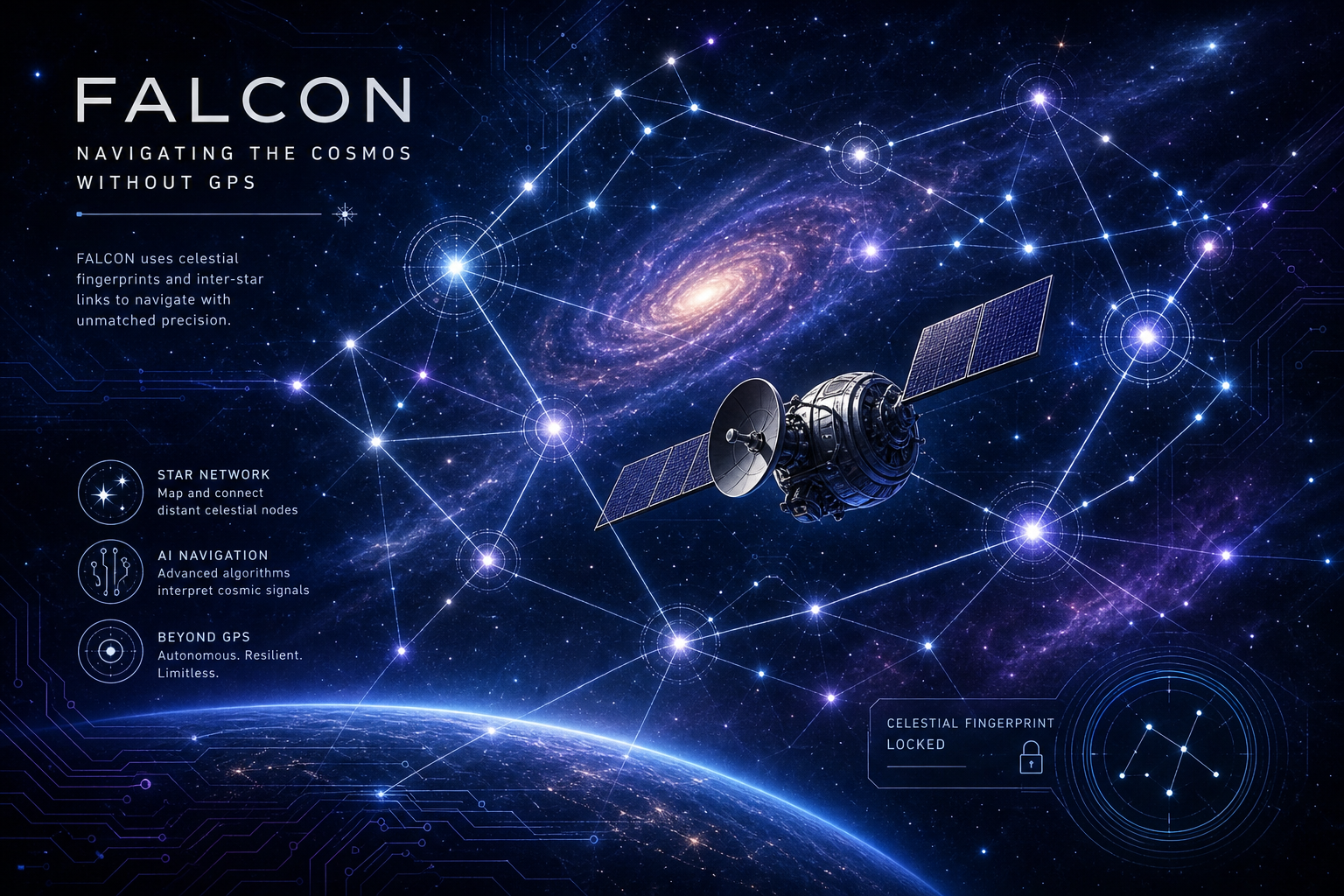
In an era where digital transformation is redefining our capabilities on Earth, NASA has taken a giant leap forward in space. The agency has successfully tested a new navigation system, known as FALCON, that allows satellites to operate without relying on traditional GPS. Many see this development as signaling a new chapter in space exploration and satellite technology.
The Birth of a New Navigation System
Traditionally, GPS has been the cornerstone for navigation, not just on Earth but in space as well. However, the limitations of GPS in certain space environments have long been a challenge. Enter this innovative system, which uses other spacecraft and even debris as reference points to autonomously guide satellites. This is more than a technical achievement; it's a creative use of the resources available in the vast expanse of space.
In just three days, FALCON managed to improve the orbits of more than 200 space objects on its own. This level of autonomy marks a significant milestone. It's like teaching a sailor to navigate using the stars, except the stars are moving debris and spacecraft. The implications of this are profound, not just for NASA but for any entity with interests in space.
The Technical Marvel Behind the System
What makes this navigation system truly remarkable is its ability to adapt and learn. It processes vast amounts of data in real-time, identifying and tracking objects that can serve as navigational aids. This is akin to having a constantly updating map that not only shows your current location but also predicts the paths of everything around you. It's a game-changer for satellite navigation, especially in crowded orbits.
The test results speak for themselves. Improving the orbits of more than 200 objects in such a short span is no small feat. This suggests that the system could potentially reduce the risk of collisions in space, a growing concern as the number of satellites and debris continues to increase. The system's ability to operate autonomously is also a nod to the future of artificial intelligence and machine learning in space applications.
Implications for Business and Humanity
The successes of this navigation system could ripple far beyond the realm of space exploration. For businesses, particularly those involved in satellite communications and space technologies, this system could lower costs and increase reliability. Imagine a world where satellites can self-navigate and self-correct, reducing the need for ground-based interventions.
From a human perspective, this innovation represents a step towards safer and more efficient space travel. As we dream of colonizing other planets or mining asteroids, the ability to navigate space accurately and autonomously becomes crucial. This development may well be the precursor to navigating the cosmos as naturally as we traverse the oceans.
Reflecting on the Future
NASA's achievement with this new navigation system is not just about a technological breakthrough. It's a testament to human ingenuity and our ability to adapt technology to challenging environments. It also prompts us to think about the future of space exploration and our role in it.
As we look up at the stars, one can't help but wonder: how will this technology shape our understanding of the universe? And what other innovations are just waiting to be discovered, hidden among the stars and debris? The possibilities are as infinite as space itself.