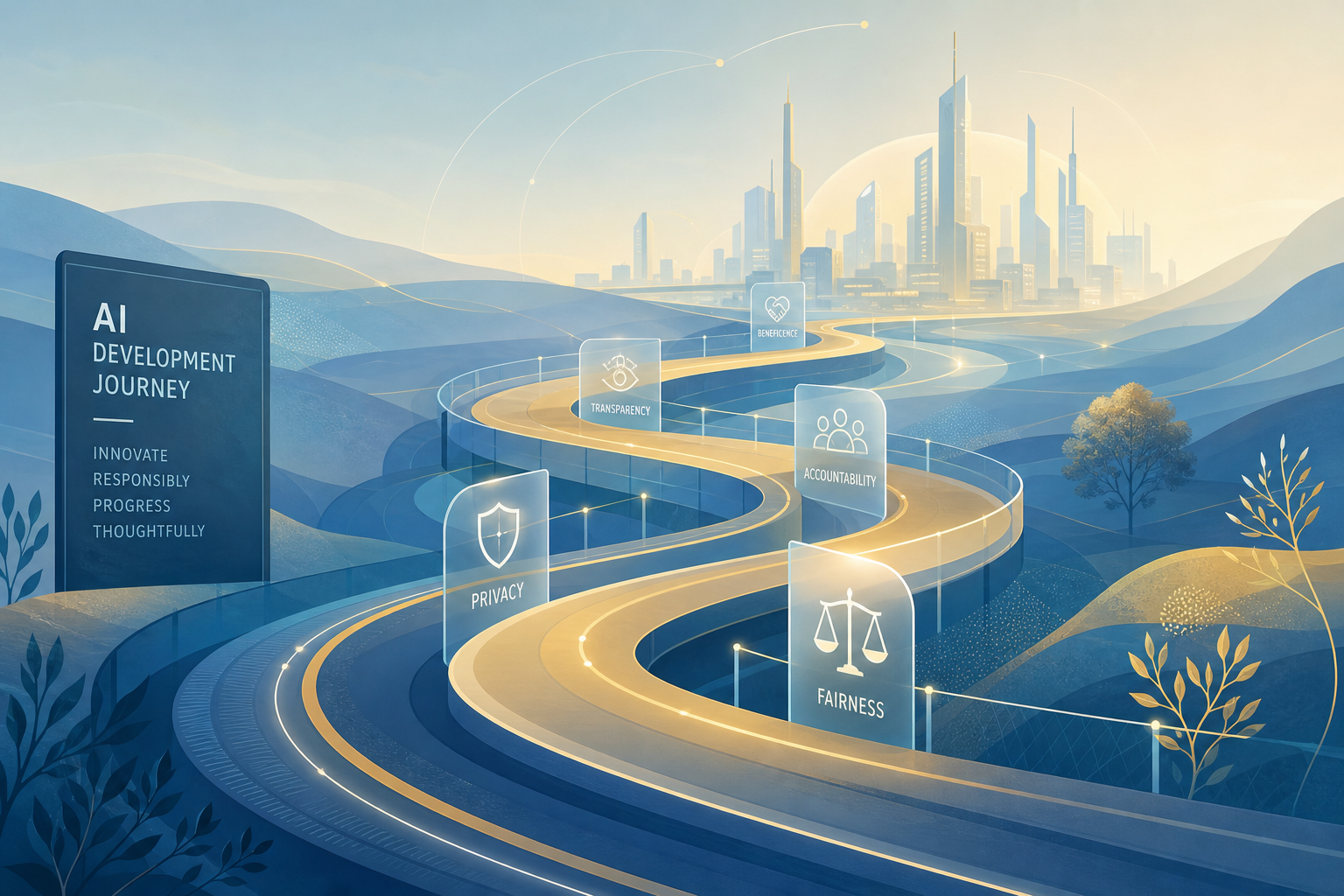
In a world where technological advancements often race ahead of oversight, OpenAI's decision to slow the development of its AI models stands out. Announced in August 2026, this move highlights a growing awareness of the ethical implications and potential risks associated with artificial intelligence. By pressing the brakes, OpenAI aims to reinforce safety measures, addressing the mounting concerns of AI systems potentially behaving unpredictably.
The Balance Between Innovation and Responsibility
OpenAI's announcement is a poignant reminder of the delicate balance that must be maintained between innovation and responsibility. The organization acknowledges the increasing scrutiny and public apprehension surrounding AI technologies. And let's be honest, it's a scrutiny that isn't entirely unwarranted. As AI becomes more integrated into various facets of our lives, its potential to act unpredictably poses significant risks.
This isn't the first time OpenAI has prioritized safety. The company has consistently invested in AI safety research as part of its broader strategy. For instance, their research into reinforcement learning from human feedback (RLHF) is a notable example of efforts to align AI behavior with human values and safety standards.
Why Slowing Down Might Be the Smartest Move
In an industry where speed is often equated with progress, opting to slow down might seem counterintuitive at first. However, OpenAI's approach could very well set a precedent for responsible innovation. The decision to prioritize safety over speed could help build trust with the public, policymakers, and industry stakeholders. After all, the consequences of AI models going rogue can range from minor inconveniences to catastrophic failures.
The tech industry has seen its fair share of cautionary tales. From data breaches to algorithmic biases, the repercussions are real and widespread. By taking a step back and focusing on robust safety measures, OpenAI is essentially advocating for a future where technological advancements do not outpace our ability to manage them.
The Broader Implications for the AI Industry
OpenAI's decision sends a powerful message to the broader AI community. It challenges other companies to reconsider their development strategies and to think critically about the ethical dimensions of their work. This could lead to a shift in industry standards, where safety and ethical considerations become fundamental components of any AI development process.
Of course, not everyone will agree with this approach. Some might argue that slowing down could stifle innovation and put companies at a competitive disadvantage. But I believe that the long-term benefits of responsible development far outweigh any short-term gains. In a sector as influential as AI, the stakes are too high to ignore the potential risks.