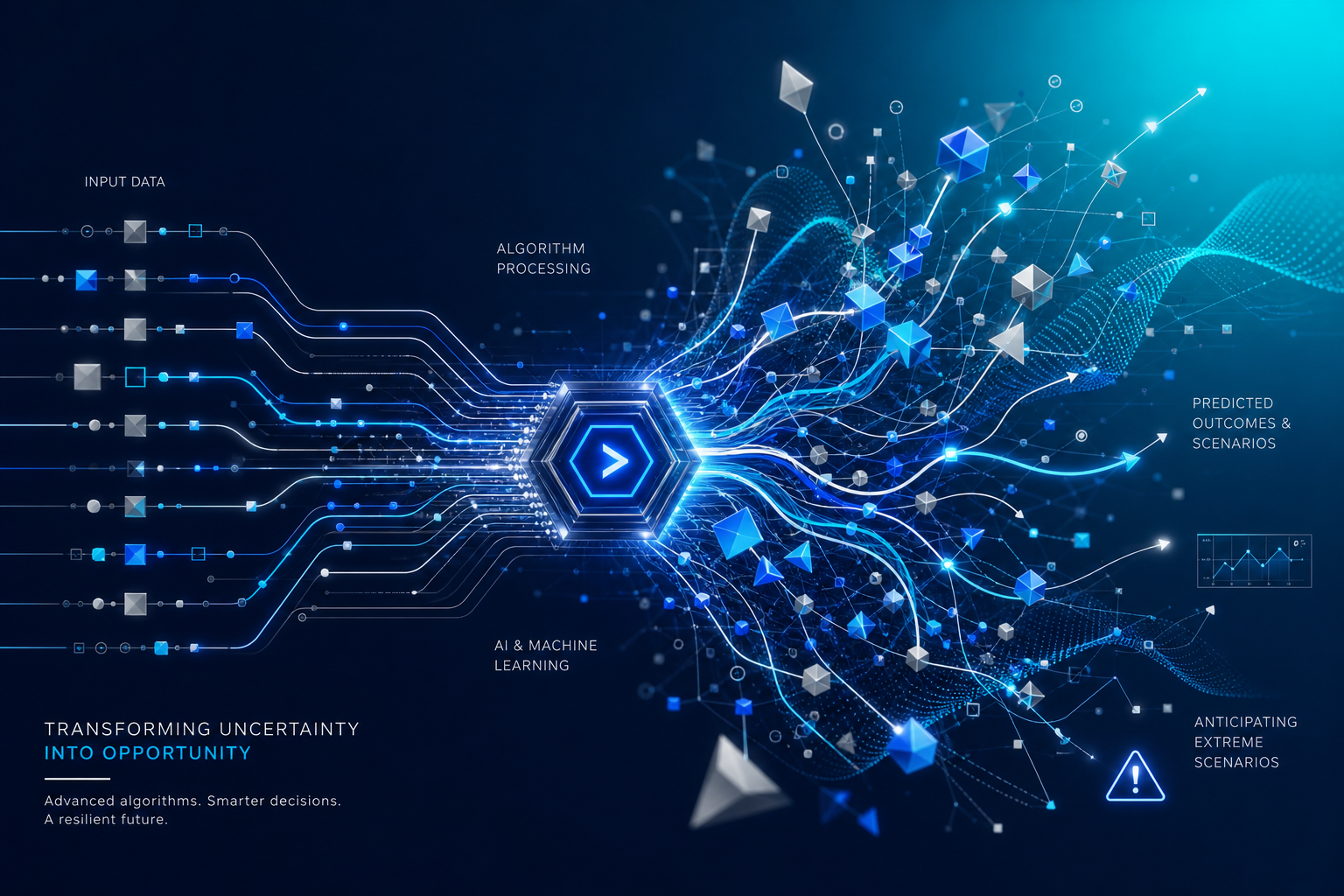
In today's fast-paced world of digital transformation, the ability to foresee and prepare for unprecedented events has become more important than ever. Researchers at MIT have developed a new algorithm that promises to generate scenarios for extreme events without relying heavily on extreme data. This innovation could be pivotal for critical infrastructure and global supply chains, which often find themselves caught off guard by unexpected disruptions.
Understanding the Algorithm's Promise
Traditionally, predictive models depend on historical data to forecast future events. This reliance becomes a limitation when dealing with "black swan" events, rare, unpredictable occurrences with significant impact. The new algorithm, detailed in a news article from MIT, offers a different approach. It learns to anticipate these scenarios proactively, without waiting for disaster data to emerge.
How does it achieve this? The algorithm is designed to simulate a wide array of potential futures, even those that deviate significantly from historical patterns. By embracing this approach, businesses can enhance their resilience, preparing not just for the likely but for the unlikely as well.
The Impact on Critical Infrastructure
Consider the implications for critical infrastructure, which includes sectors like energy, water, transportation, and telecommunications. These are the backbone of modern society, and their disruption can lead to cascading failures with far-reaching consequences. In 2003, a massive blackout in the northeastern United States and Canada affected 50 million people. Economic loss estimates from this event range widely, with some reports suggesting figures between $4 billion and $10 billion, depending on the source.
With the new algorithm, infrastructure managers can simulate scenarios that account for variables not previously considered, such as simultaneous natural disasters or unforeseen geopolitical tensions. This proactive approach allows for the development of contingency plans robust enough to withstand a broader range of threats.
Strengthening Global Supply Chains
Global supply chains are another area poised to benefit significantly from this innovation. The COVID-19 pandemic exposed vulnerabilities in supply chains worldwide, leading to delays and shortages that affected everything from medical supplies to consumer electronics. The challenge is not just to recover but to build systems that are less susceptible to future disruptions.
By using the algorithm to anticipate extreme scenarios, supply chain managers can identify potential points of failure and devise strategies to mitigate them. This might involve diversifying supply sources, stockpiling critical materials, or developing alternative logistics plans. The goal is to maintain the flow of goods even when the unexpected strikes.