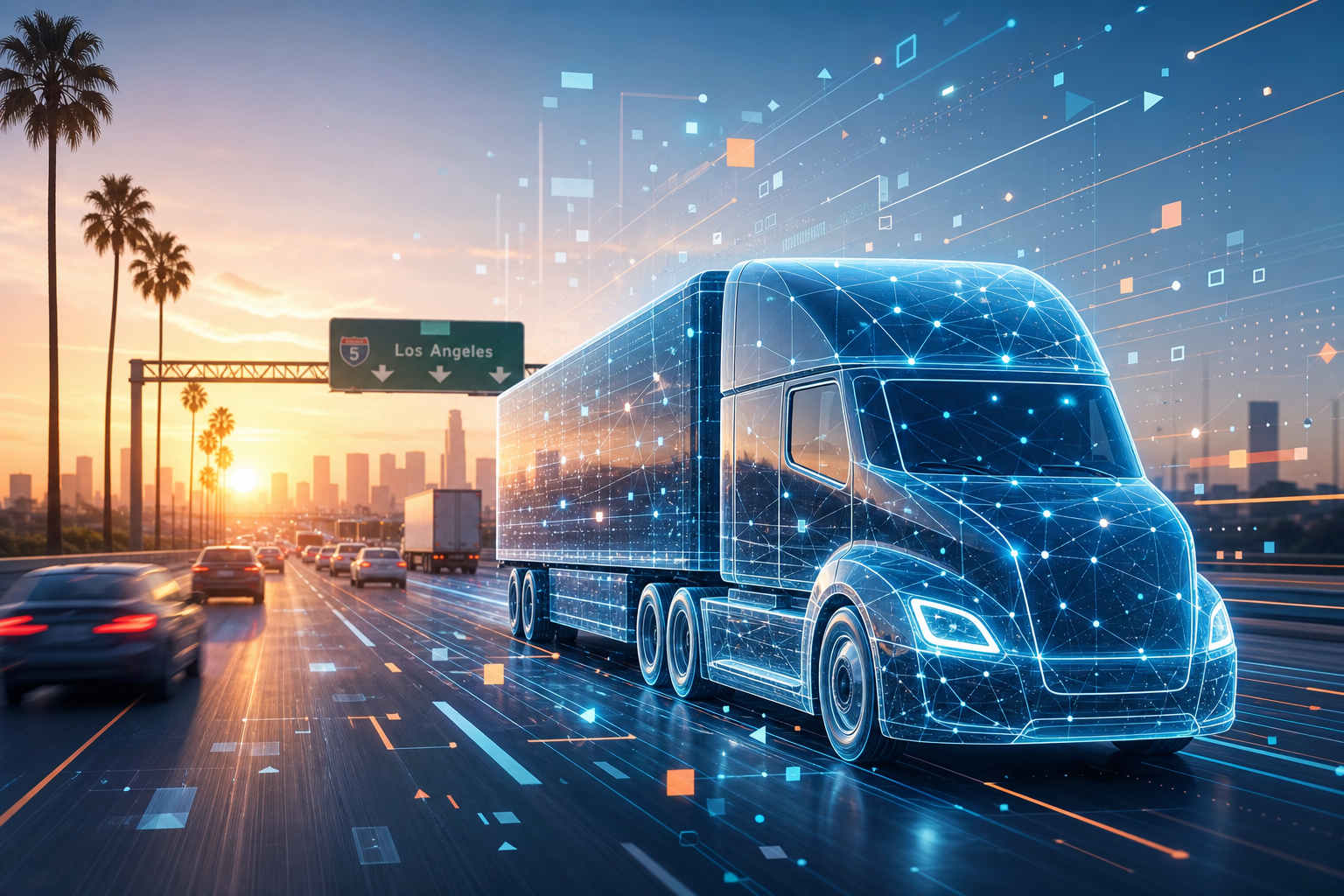
Picture yourself cruising down a California highway and spotting a massive truck gliding along without a driver behind the wheel. It's not a scene from a sci-fi movie; it's happening right now. Aurora Innovation and Kodiak AI, two companies dedicated to developing self-driving trucks, have received permits from the California Department of Motor Vehicles on August 14, 2026, to test their vehicles on the state's highways. This development marks a significant step forward in the digital transformation of transportation, opening up a host of possibilities and challenges. Let's explore what this means for the future of logistics and beyond.
The Road to Autonomous Logistics
The California DMV's decision to allow these tests represents a milestone for autonomous vehicle technology. For Aurora Innovation and Kodiak AI, this is a critical phase in their journey to revolutionize logistics. Both companies have been diligently working on perfecting their self-driving capabilities, aiming to ensure that these trucks can operate safely and efficiently alongside human-operated vehicles.
What stands out here is the focus on logistics rather than passenger transport. The long stretches of highway are ideal for testing the trucks' abilities to make split-second decisions, handle varying traffic conditions, and seamlessly integrate into existing transportation networks.
Safety and Efficiency: The Twin Pillars
Safety is, undoubtedly, the primary concern. The testing phase will be rigorous, with every truck equipped with sensors and software designed to detect and respond to road conditions in real time. The objective is not just to match human performance but to surpass it, reducing accidents caused by human error.
But it's not just about safety. Efficiency is equally crucial. While self-driving trucks promise to redefine logistics by optimizing routes, reducing fuel consumption, and potentially operating longer hours, they are currently subject to regulatory and technological constraints. These vehicles cannot yet operate entirely without breaks due to existing laws and the need for ongoing technological supervision. However, the potential to reduce costs and carbon footprints remains a compelling case for businesses to adopt autonomous logistics solutions.
The Human Element: Jobs and Society
With every technological advance, there's a ripple effect on society. The introduction of self-driving trucks raises questions about the future of jobs in the trucking industry. While some fear job losses, others argue that new roles will emerge in managing and maintaining these advanced vehicles. The transition could mirror past industrial shifts where technology created more opportunities than it displaced.