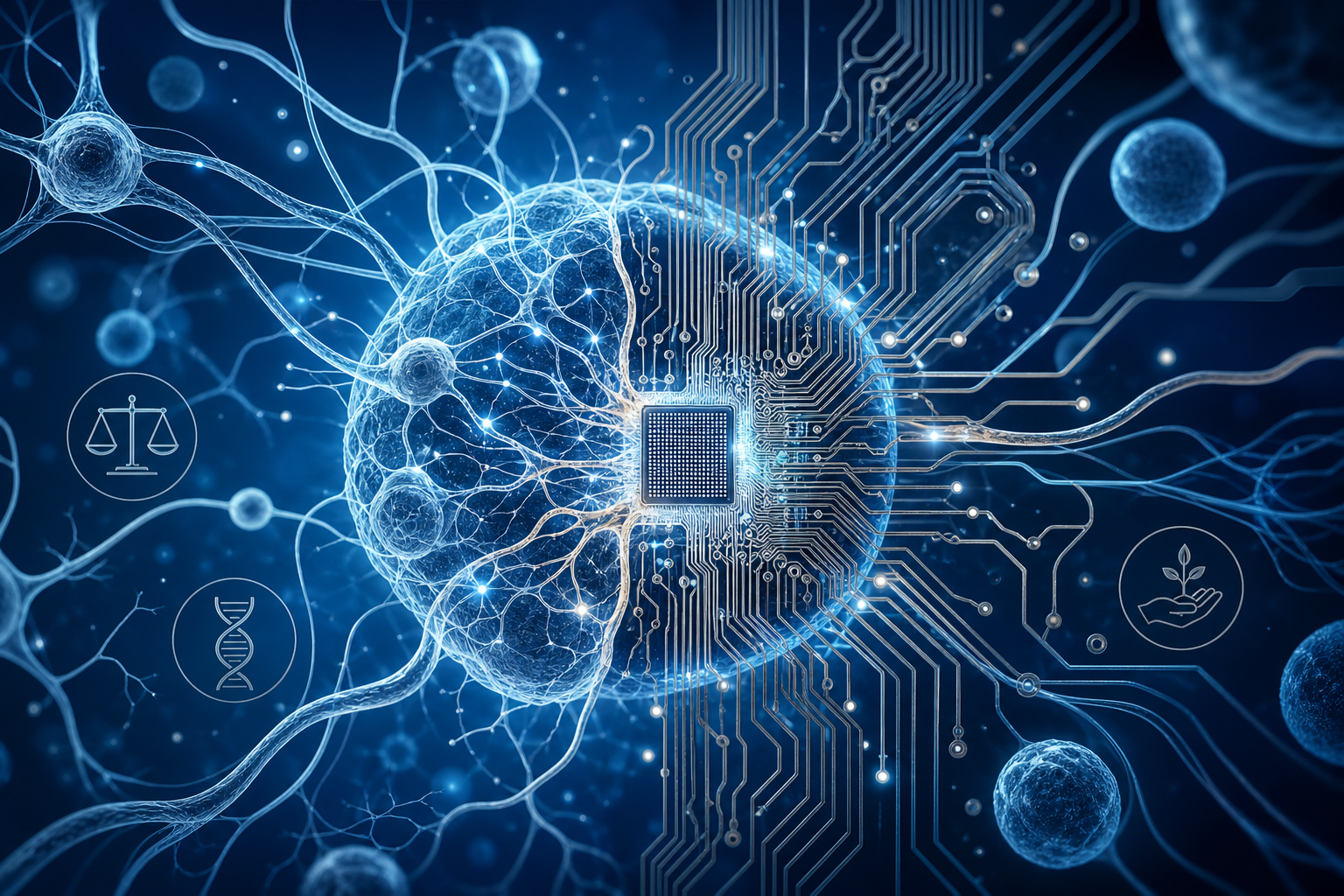
As we stand on the brink of a new era in biotechnology, the cultivation of mini human brains, known as organoids, is causing a stir in laboratories across the globe. These tiny, yet complex structures have the potential to reshape our understanding of intelligence and challenge the current paradigms of artificial intelligence. It's a development that could redefine the boundaries between biological and artificial cognition.
The Rise of Organoids
In recent years, scientists have made remarkable strides in growing organoids. These are miniature, simplified versions of human organs, created from stem cells that self-organize into three-dimensional structures. The focus now is on brain organoids, which mimic certain aspects of the human brain's architecture and function. By nurturing these organoids, researchers aim to delve deeper into the mysteries of the human brain, exploring everything from neurological disorders to the very nature of consciousness.
The implications are profound. As organoids become more sophisticated, they could one day provide insights that surpass current neural networks in understanding cognitive processes. However, this is a speculative future prospect rather than a present reality, as organoids are still in the early stages of development compared to the advanced processing abilities of artificial neural networks. While these networks are designed to process information in ways inspired by the human brain, organoids, made of living cells, might eventually offer insights into learning and memory with a more organic processing approach.
A New Frontier in AI
The emergence of organoids is prompting a reevaluation of what constitutes artificial intelligence. Traditional AI relies on algorithms and data-driven models to simulate cognitive processes. However, as organoids develop, they could offer an intriguing alternative to traditional AI. What I mean by a more "authentic intelligence" is the biological basis of organoids that allows them to process information differently from AI systems, though they currently do not exhibit intelligence comparable to these systems. This shift could lead to breakthroughs in how we utilize AI across various sectors, from healthcare to robotics.
Yet, this is not without its challenges. The ethical implications of using living brain tissue in research are significant. How do we ensure that these organoids are used responsibly? What constitutes ethical treatment of these biological entities? These questions underscore the need for robust ethical frameworks as we navigate this uncharted territory.
Bridging the Biological and Artificial
The potential of organoids lies in their ability to bridge the gap between biological and artificial systems. Unlike traditional AI, which operates in a binary on-off state, organoids could, in theory, process information in a more complex, organic manner. This could lead to a new class of hybrid systems that combine the strengths of both biological and artificial intelligence.
Imagine the possibilities: medical diagnostics powered by organoid-based reasoning, or autonomous systems that learn and adapt with the fluidity of a human mind. These advancements could revolutionize industries, offering more intuitive and adaptable solutions to complex problems.
Navigating the Ethical Landscape
As we advance, the ethical considerations surrounding organoids cannot be ignored. The creation of brain-like structures raises questions about consciousness and identity. At what point do these organoids become more than mere research tools? What rights, if any, should they possess? These are questions that scientists, ethicists, and policymakers must address collaboratively.
In my view, the development of organoids represents both an exciting opportunity and a profound responsibility. We stand at a crossroads where science fiction inches closer to reality. While the potential benefits are enormous, we must tread carefully to ensure that our pursuit of knowledge does not outpace our ethical considerations.
As we ponder these questions, we are reminded of the delicate balance between innovation and ethics. Organoids may indeed hold the key to unlocking new dimensions of intelligence, but it is up to us to guide this discovery with wisdom and foresight. The journey ahead is uncertain, but therein lies the beauty of exploration. How will we shape this future?