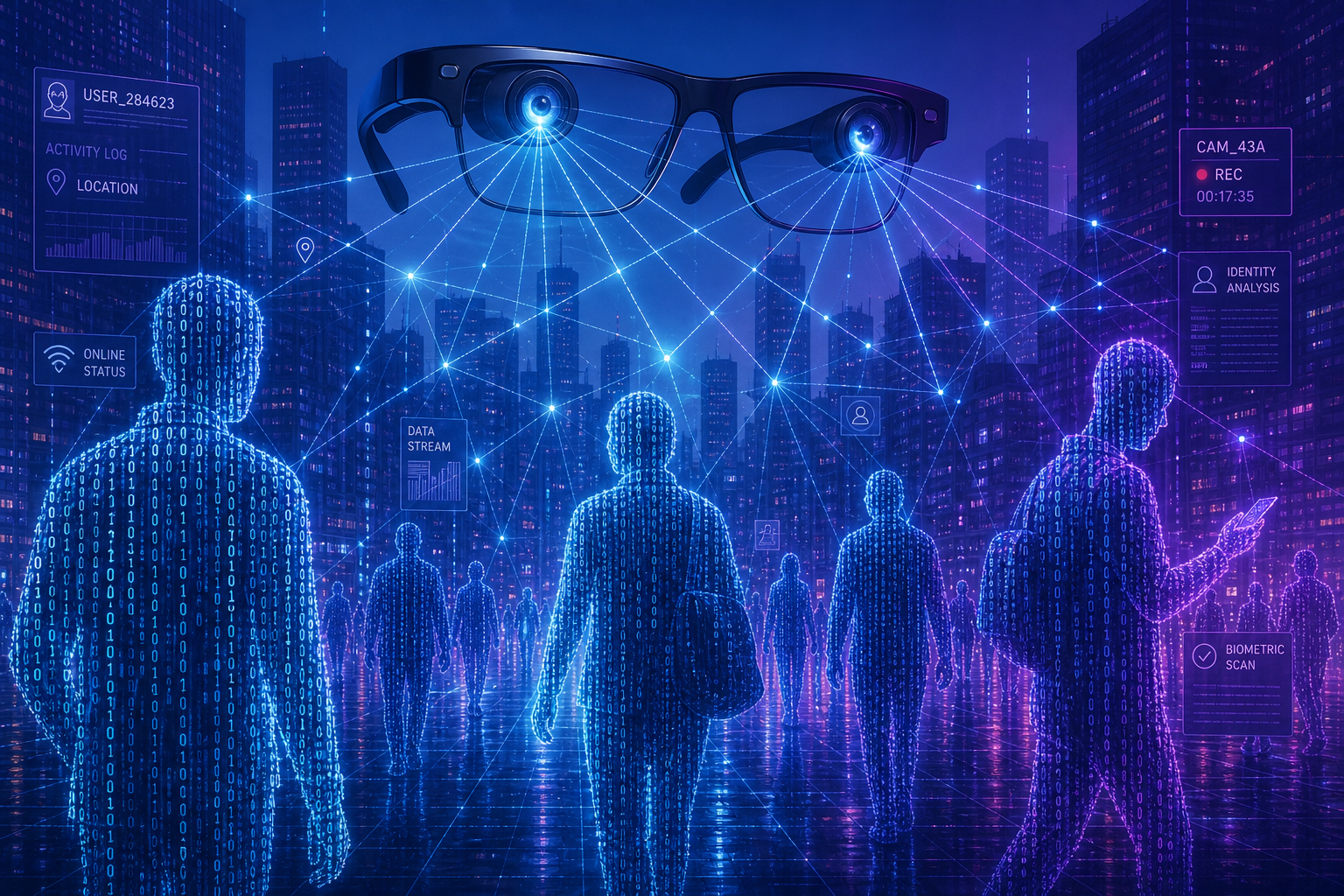
Walking down the street, sitting at a café, or even attending a concert, have you ever wondered if someone is recording you? With the rise of Meta's smartglasses, this question is becoming increasingly relevant. These devices, equipped with cameras, are designed to seamlessly capture the world around us. But as their popularity grows, so do concerns about privacy violations.
The All-Seeing Eye
Imagine being at a concert, lost in the music, only to discover later that you were part of someone’s covert recording. Or consider the unsettling thought of being filmed in your own home without consent. These scenarios are not just hypothetical. Reports from individuals suggest they've been secretly filmed in private and public settings. A man from Los Angeles, who runs a business called Ghost Metas, confessed that some clients have "creepy" intentions. He mentioned that one client admitted to using the glasses to record in strip clubs. Ghost Metas is part of a larger market offering services to disable the LED indicator on the glasses, making filming undetectable.
The implications are troubling. Without the LED, there's no way of knowing when you're being filmed. This raises significant ethical questions. Is it acceptable for technology to facilitate such invasions of privacy? And what does this mean for our right to consent?
The Ethics of Invisibility
The idea of invisible surveillance is not new. Yet, the ease with which these smartglasses can blend into daily life marks a new frontier. Unlike a conspicuous smartphone, glasses are worn naturally, making them an unobtrusive tool for capturing images and sound. This convenience, however, comes with a cost. The admission from a user that glasses are "more convenient" for recording in prohibited places like strip clubs highlights a broader issue: the erosion of trust. When individuals can be recorded without their consent, the social contract of mutual respect and privacy begins to fray. The fact that businesses are thriving by enabling such actions points to a deeper societal issue. Are we prioritizing technological advancement over ethical responsibility?
Balancing Innovation and Privacy
The development of smartglasses represents a remarkable technological achievement. They offer incredible potential for capturing and sharing experiences. But as with any powerful tool, they require responsible use. The challenge lies in finding a balance between innovation and the protection of individual privacy.
Regulations may be necessary to ensure that these devices are used ethically. Clear guidelines and robust enforcement could help mitigate the risks. Additionally, fostering a culture that values privacy can encourage individuals to respect the boundaries of others.